on February 7, 2014
If you would like to reuse this drawing please ask me here. Thank you!

© Matthew Buck Hack Cartoons
The campaigning ahead of the autumn referendum on the independence of Scotland from the United Kingdom has started. The figureheads for the respective Yes and No campaigns are Alastair Darling, the former Chancellor of the Exchequer, and Alex Salmond, the first minister of Scotland.
on February 5, 2014
If you would like to reuse this drawing please ask me here. Thank you!

© Matthew Buck Hack Cartoons
Lloyds and Muggins – the partly nationalised bank may be for sale in the markets before the next election. To no one’s great surprise.
It’s also choosing to cut its provision of local advisors to Small and Medium enterprise (SMEs) aka taxpayers or shareholders. People may, of course, easily be all three of these categories.
on January 22, 2014
If you would like to reuse this drawing please ask me here. Thank you!

© Matthew_Buck Hack Cartoons for http://tribunecartoons.com
Estimates of economic growth in the UK have been upgraded by the International Monetary Fund but isn’t clear that the kind of growth we are told to expect is good for us.
Also at home, it is suggested that ‘energy drinks’ are banned in school because of the bad behaviour and ill-health they can cause among the pupils.
The ‘energy’ drinks in the cartoon metaphor are Quantitative Easing, private debt and disguised public subsidy to the commercial property industry – the chancellor’s Help to Buy scheme. All provide a short-term fix of ‘energy’ which must be handy if there’s an election coming up, but in the long-term they also make us ill and fat.
on January 20, 2014
If you would like to reuse this drawing please ask me here. Thank you!

© Matthew Buck Hack Cartoons for Waitrose Weekend
A fun commission about the public perception of Haggis. It’s a small Scottish animal, yes?
on January 18, 2014
If you would like to reuse this drawing please ask me here. Thank you!
© Matthew Buck Hack Cartoons and Multimedia
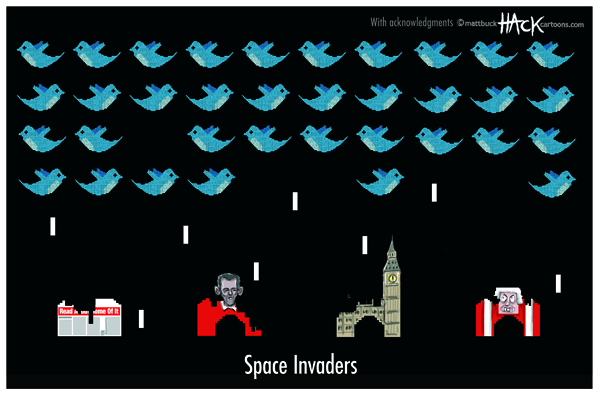
One of the more famous libel litigants of the recent past has died.
Lord Alistair McAlpine famously sued Sally Bercow, wife of the current speaker of the House of Commons, for libel following a tweet she made about him amid allegations of his collusion in covering up a long-running series of stories in paedophilia at a number of children’s homes in North Wales. This followed broadcast of allegations on BBC Newsnight in 2012.
Ten thousand or more other people who made similar allegations across social media services were not prosecuted.
Beyond the details of death, a bigger issue here is the spread of global communication tools and which mean legal jurisdictions are no longer as easily enforceable as they once were (see the cartoon).
In another example of this phenomenon, The Wall Street Journal newspaper in America has just won a legal case allowing it to report details of the long-running #hackingtrial about the activities of the former News International businesses (now News UK).
This means they will now be able to report detail that cannot legally be reported or repeated in the United Kingdom.
on January 17, 2014
If you would like to reuse this drawing please ask me here. Thank you!

© Matthew Buck Hack Cartoons
Speedy sketchbook drawing of guests on the long running political discussion show. Some more successful than others.
on January 16, 2014
If you would like to reuse this drawing please ask me here. Thank you!

© Matthew Buck HackCartoons
A long running embarrassment to Liberal Democratic party has flared up again following publication of a report into allegations of sexual harrassment made against the former Chief Executive of the party, Chris Rennard.
Despite the ‘broadly credible’ allegations of sexual harassment recorded in the report which were made by several female would-be Lib Dem parliamentary candidates, party leader and deputy prime Minister Nick Clegg seems unable or unwilling to do anything.
If there’s much more of this, the story might start feeling like the broken promise on student tuition fees from the start of this coalition parliament.
As this pithy television interview makes clear, perhaps Clegg needs to ‘man up’ a bit. Mind, after you’ve read this, you’ll understand why politics is always a filthy business.
Updated: 21st August 2014. The suspension of Lord Rennard from the party has been lifted although the issues, the specific incidents and their legacy will linger.
There has been a lot of valid criticism of the very hight bar of criminal proof applied to the internal party investigations conducted by Alastair Webster QC.
Perhaps unsurprisingly, most of the ‘broadly credible’ victims have left a life in politics, leading, I speculate, many more bright, articulate and potentially useful people with them.

Screenshot of Bridget Harris speaking about the Rennard issue.
There is a good round up by James Kirkup of The Telegraph here if you would like to take a larger view of this long running mess.
on January 15, 2014
If you would like to reuse this drawing please ask me here. Thank you!
© Matthew Buck Hack Cartoons for The Independent
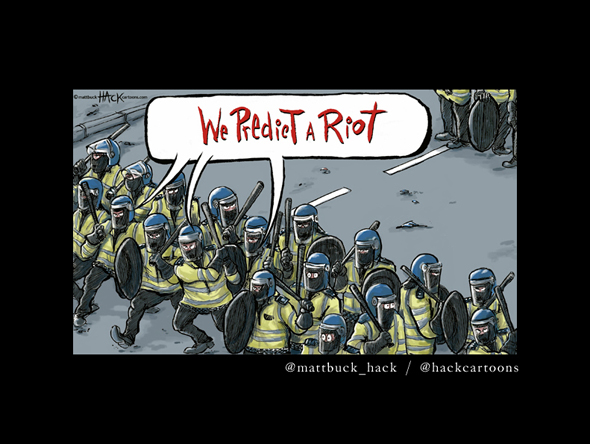
Here comes 2014 according to Martin Wolf in The Financial Times. The article is worth registering for at the website of the news organisation.
on January 14, 2014
If you would like to reuse this drawing please ask me here. Thank you!

© Matthew Buck Hack Cartoons for Hampshire Chronicle.co.uk
The new bridge for Winchester railway station is due to open. This is a cartoon that did not make the print edition.

Commuter report from @mpntod